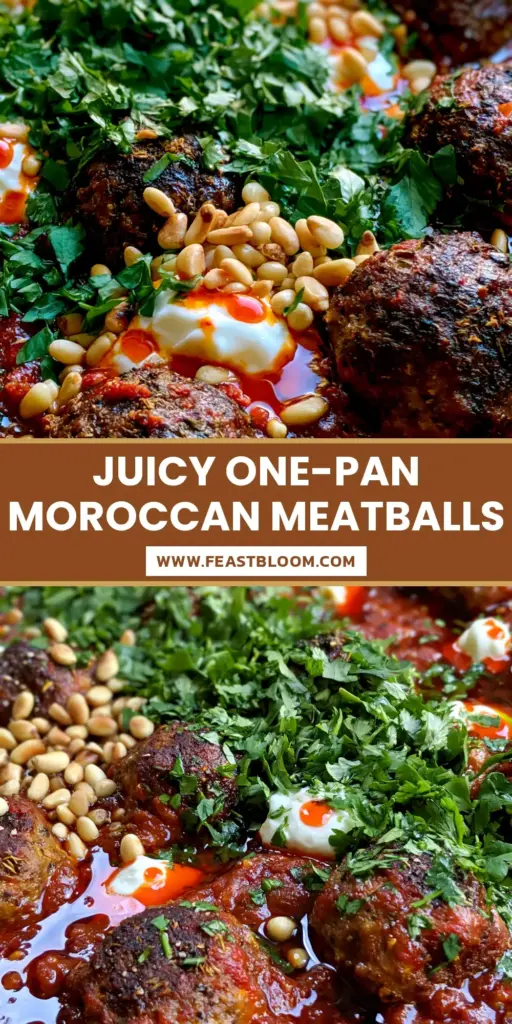
There is something undeniably magnetic about a bubbling, rustic cast iron skillet arriving at the center of the table. These Moroccan meatballs, also known as Kefta, capture that exact moment of culinary magic where charred, savory protein meets a vibrant, spice-laden sauce. Imagine the sight of steam rising softly in the morning light, carrying the scent of cumin and toasted pine nuts across your kitchen.
In this recipe, we are bridging the gap between authentic North African flavors and the approachable comfort of a home-cooked meal. Whether you are looking for a show-stopping weekend dinner or a way to elevate your weeknight rotation, these Moroccan meatballs deliver a visual and sensory experience that rivals any professional bistro. The glossy sheen of the harissa-infused sauce and the cooling dollops of Greek yogurt create a masterpiece of contrast.
By using a combination of ground beef and lamb, we achieve a depth of flavor that is both rich and complex. Every bite is punctuated by the crunch of toasted pine nuts and the brightness of fresh cilantro, ensuring that every element from our visual blueprint is represented on your plate. Get ready to master the art of the perfect sear and the smoky balance of harissa.
Why These Moroccan Meatballs are the Ultimate Comfort Food
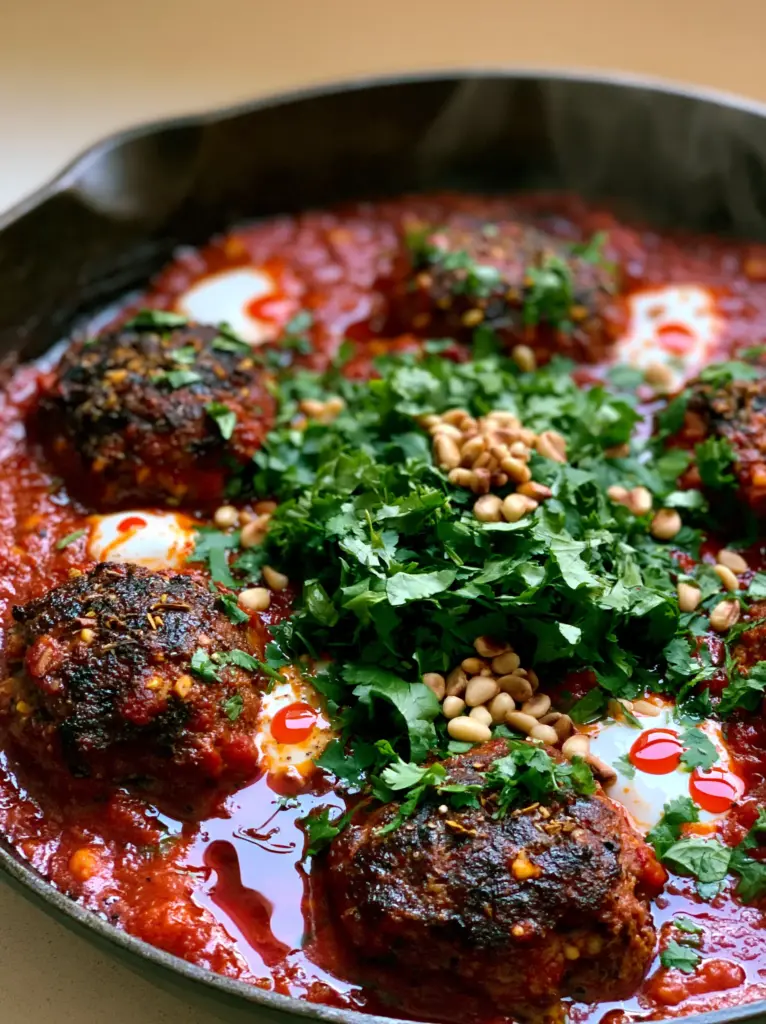
- Perfectly Seared Texture: We utilize a dark cast iron skillet to achieve a deep, caramelized crust on every meatball, locking in moisture while providing a satisfying snap.
- Smoky and Glossy Sauce: The harissa tomato sauce is cooked down until it reaches a rich, deep-red hue with visible droplets of flavorful red oil shimmering on the surface.
- Sophisticated Flavor Balance: The heat from the smoky harissa is perfectly tempered by creamy dollops of plain Greek yogurt and the earthy sweetness of caramelized onion bits.
- Professional Visual Appeal: From the heavy scatter of vibrant green cilantro to the cracked black pepper finish, this dish is designed to look as good as it tastes.
The Anatomy of a Perfect Kefta: Ingredients and Substitutions
Ground Beef and Lamb: A 50/50 blend provides the perfect fat content for a juicy interior and a superior sear. If you prefer a leaner profile, you can use all beef, though the lamb adds that signature Moroccan earthiness.
Smoky Harissa Paste: This is the soul of the dish, providing heat and a complex smoky undertone. If you are sensitive to spice, look for a “mild” harissa or start with half the recommended amount.
Caramelized Onions: We finely dice the onions and cook them until they become golden “bits” that melt into the sauce. This provides a natural sweetness that balances the acidity of the tomatoes.
Plain Greek Yogurt: Use a full-fat variety for the most luxurious texture. The cooling nature of the yogurt is essential for cutting through the richness of the seared lamb.
Toasted Pine Nuts: These add a buttery, nutty crunch that elevates the dish from a simple stew to a gourmet experience. You can substitute with slivered almonds if pine nuts are unavailable.
Fresh Cilantro and Parsley: A heavy hand of fresh herbs is non-negotiable for that vibrant, bright green finish. If you are someone who finds cilantro soapy, Italian flat-leaf parsley is an excellent alternative.
Warm Spices (Cumin, Cinnamon, Coriander): These foundational “invisible” ingredients are what create the aromatic profile characteristic of Moroccan cuisine. We use 1 tsp (5g) of each to ensure a well-rounded flavor profile.
Essential Tools for the Rustic Skillet Look
To achieve the visual result seen in our blueprint, a 12-inch (30cm) cast iron skillet is your best friend. The heavy metal retains heat beautifully, allowing for that deep browning on the meatballs without overcooking the centers. If you don’t have cast iron, a heavy-bottomed stainless steel pot can work, though you may lose some of that rustic char.
You will also need a high-quality chef’s knife for finely chopping the cilantro and onions. For those looking to expand their Moroccan repertoire, this skillet also works wonders for a vegan Moroccan stew or even a quick batch of chicken fajitas. Proper equipment is the first step toward professional-grade results.
How to Master Moroccan Meatballs: Step-by-Step
1. Crafting the Meatball Base
In a large mixing bowl, combine 1 lb (450g) ground beef and 1 lb (450g) ground lamb. Add 1/2 cup (60g) breadcrumbs, 1 large egg, and your spice blend of cumin, coriander, and cracked black pepper. Mix gently by hand just until combined; overworking the meat will result in a tough, dense meatball rather than a tender one.
2. The Art of the Sear
Heat 2 tbsp (30ml) of olive oil in your cast iron skillet over medium-high heat. Once the oil is shimmering and just starting to faintly smoke, add the meatballs in batches. Sear until a deep golden-brown crust forms on all sides, about 2-3 minutes per side. Remove the meatballs and set them aside; they will finish cooking in the sauce later.
3. Building the Smoky Harissa Sauce
In the same skillet, add your finely diced onions. Sauté until they become translucent and begin to turn into caramelized bits, scraping up the flavorful browned bits (fond) from the bottom of the pan. Stir in 3 tbsp (45g) of harissa paste and 1 can (14oz/400g) of crushed tomatoes. Let the sauce simmer until it thickens and a glossy sheen appears on the surface.
4. The Final Simmer and Assembly
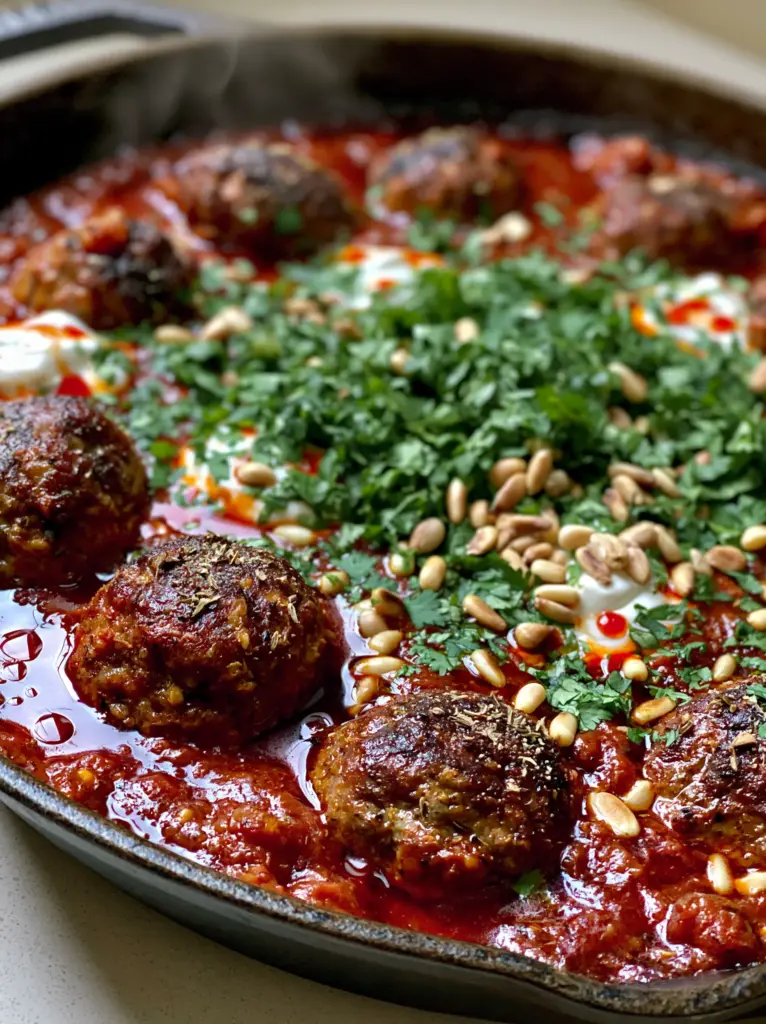
Nestle the seared meatballs back into the bubbling tomato sauce. Reduce the heat to low and cover for 8-10 minutes, allowing the flavors to meld and the meat to reach an internal temperature of 160°F (71°C). You should see tiny droplets of red oil from the harissa rising to the surface, signaling the sauce is perfectly emulsified.
5. Finishing Touches for Visual Impact
Remove the skillet from the heat while it is still steaming. Dollop small spoonfuls of Greek yogurt across the surface and scatter a handful of toasted pine nuts. Finally, add a heavy scatter of chopped cilantro and a final aggressive crack of black pepper. The contrast of the white yogurt against the deep red sauce is what makes this dish truly pop.
Expert Tips for the Perfect Skillet Meal
- Don’t Crowd the Pan: When searing the Moroccan meatballs, ensure there is space between them. If the pan is too full, the meat will steam instead of browning, and you’ll miss out on that crust.
- Toast Your Nuts: Always toast the pine nuts in a dry pan for 2-3 minutes before adding them as a garnish. This releases their essential oils and significantly improves the aroma.
- Check the Harissa Heat: Harissa brands vary wildly in heat. Always taste a small bit of your sauce before adding the meatballs back in so you can adjust with a pinch of sugar or extra yogurt if needed.
- The Steam Factor: To capture that “fresh off the stove” look for your own photos, serve the dish immediately. The steam adds a layer of movement and freshness to the presentation.
Make-Ahead, Storage, and Reheating
These Moroccan meatballs are actually better the next day as the spices have more time to infuse into the meat. Store leftovers in an airtight container in the refrigerator for up to 3 days. When reheating, use a small skillet over low heat with a splash of water to loosen the sauce and maintain that glossy sheen.
For freezing, it is best to freeze the raw meatballs on a baking sheet before transferring them to a bag. The sauce can be frozen separately. This makes for one of those perfect quick recipes you can pull together on a busy Tuesday night. Simply thaw in the fridge overnight before cooking as directed.
What to Serve with Your Moroccan Feast
To soak up every drop of that smoky harissa sauce, serve these meatballs with warm pita bread or a fluffy bed of couscous. If you want to keep the meal light, a fresh pico de gallo might seem unconventional, but the acidity of the tomatoes and lime works surprisingly well with North African spices. For a complete spread, consider pairing this with a cooling drink like a cucumber mint cooler or a crisp white wine.
If you find yourself with extra sauce, it makes a fantastic base for a Moroccan-inspired pasta, similar in spirit to a caramelized onion pasta. The versatility of these flavors means they can adapt to whatever you have in your pantry.
Frequently Asked Questions
Yes, Kefta refers to the ground meat mixture used throughout the Middle East and North Africa. This recipe uses traditional Kefta spices tailored for a Moroccan flavor profile.
Yes, you can use any heavy-bottomed skillet or stainless steel pot. However, cast iron is preferred for its superior heat retention, which helps achieve that professional-grade sear.
Absolutely. Slivered almonds or toasted pistachios are excellent substitutes that provide a similar crunch and earthy flavor profile.
Harissa’s heat level varies by brand. Generally, it provides a medium heat with deep smoky undertones. If you’re concerned, start with 1 tablespoon and add more to taste.
The secret lies in the fat content and handling. Using a blend of beef and lamb ensures enough fat to keep them moist, and mixing the ingredients just until combined prevents them from becoming tough.
The Ultimate Moroccan Meatballs Recipe
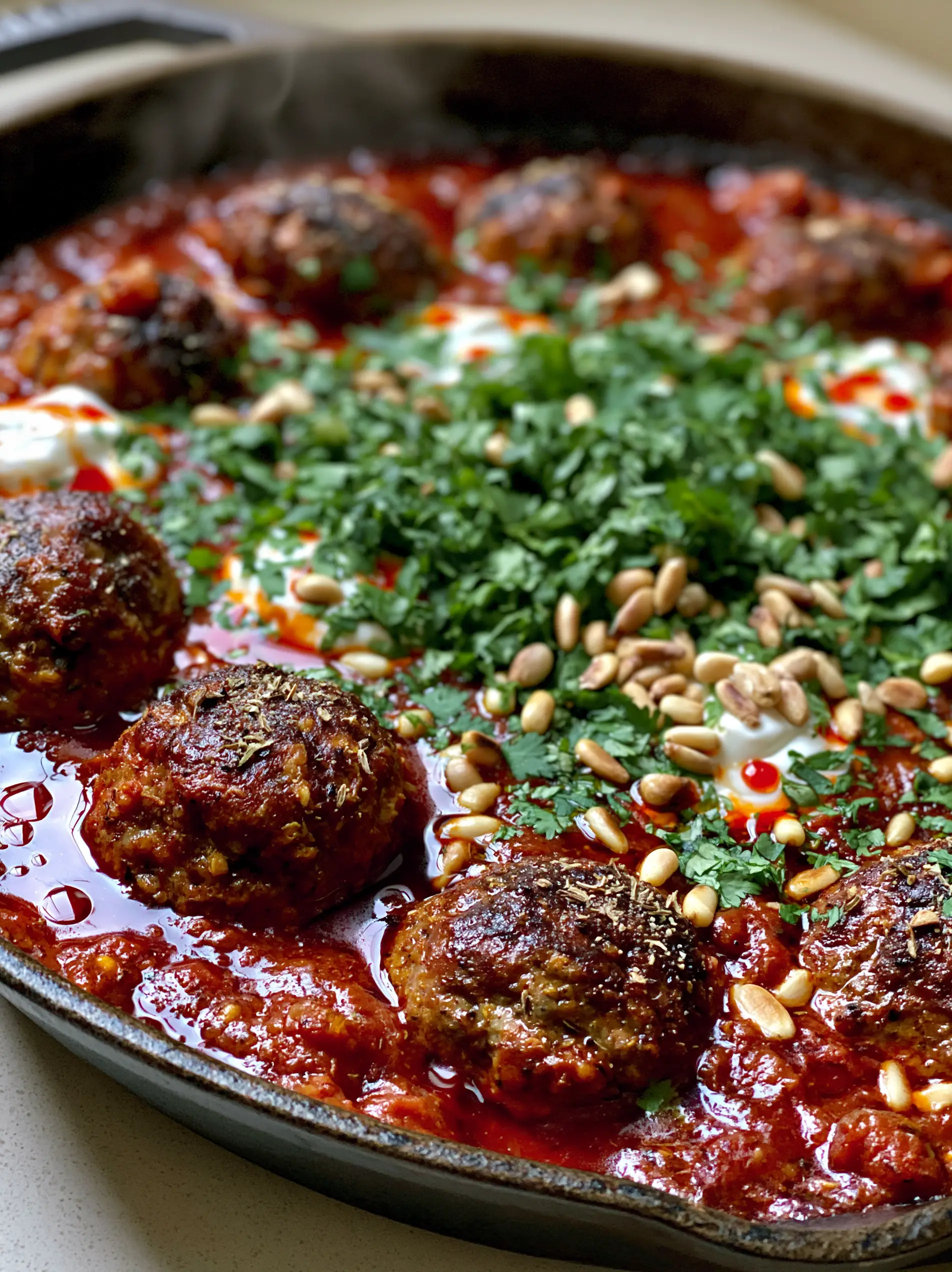
Moroccan Meatballs with Smoky Harissa Tomato Sauce and Toasted Pine Nuts
Ingredients
Equipment
Method
- Combine ground beef, lamb, breadcrumbs, egg, and spices in a bowl. Form into 1.5-inch meatballs.
- In a cast iron skillet over medium-high heat, sear meatballs in olive oil until a deep brown crust forms. Remove and set aside.
- Sauté onions in the same skillet until caramelized bits form. Stir in harissa and tomatoes.
- Return meatballs to the pan. Simmer for 10 minutes until the sauce is glossy and meatballs are cooked through.
- Top with dollops of Greek yogurt, toasted pine nuts, and cilantro. Serve steaming hot.
Notes
Tip 2: Toast pine nuts in a dry pan until golden for maximum aromatic impact.
Bringing the Flavors of Morocco Home
There is nothing quite like the satisfaction of creating a dish that looks like it belongs on a professional food blog right in your own kitchen. These Moroccan meatballs are a testament to the power of simple ingredients treated with respect. From the sear of the cast iron to the final sprinkle of cilantro, every step is an invitation to enjoy the process of cooking.
If you enjoyed this recipe, please consider leaving a comment below and sharing your results! Don’t forget to follow us on Pinterest for more culinary inspiration and visual guides. Your support helps us continue to develop high-quality, scientifically-backed recipes for home cooks everywhere.