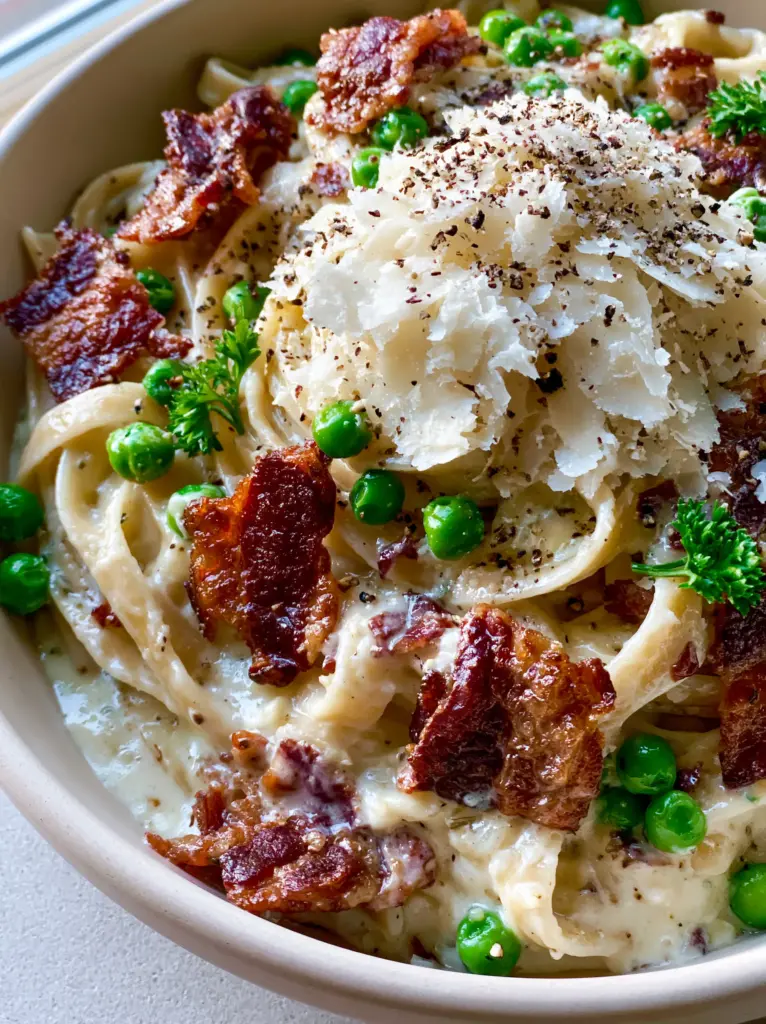
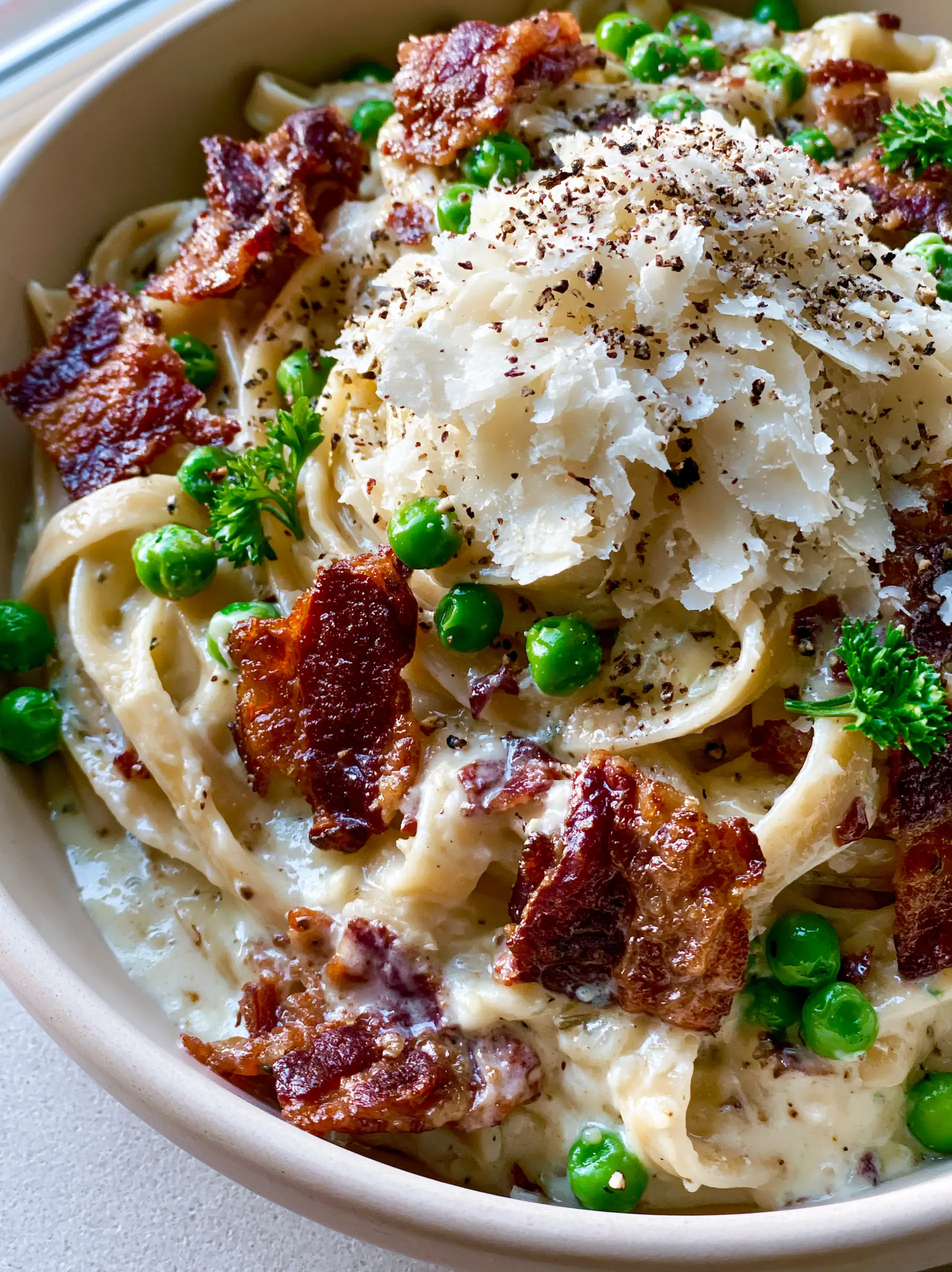
There is something inherently comforting about a bowl of pasta that catches the morning light just right, showing off every glistening curve of a silk-smooth sauce. This Bacon and Pea Pasta isn’t just a meal; it is a masterclass in texture, balancing the deep, smoky crunch of mahogany-hued bacon against the sweet, vibrant pop of garden-fresh peas.
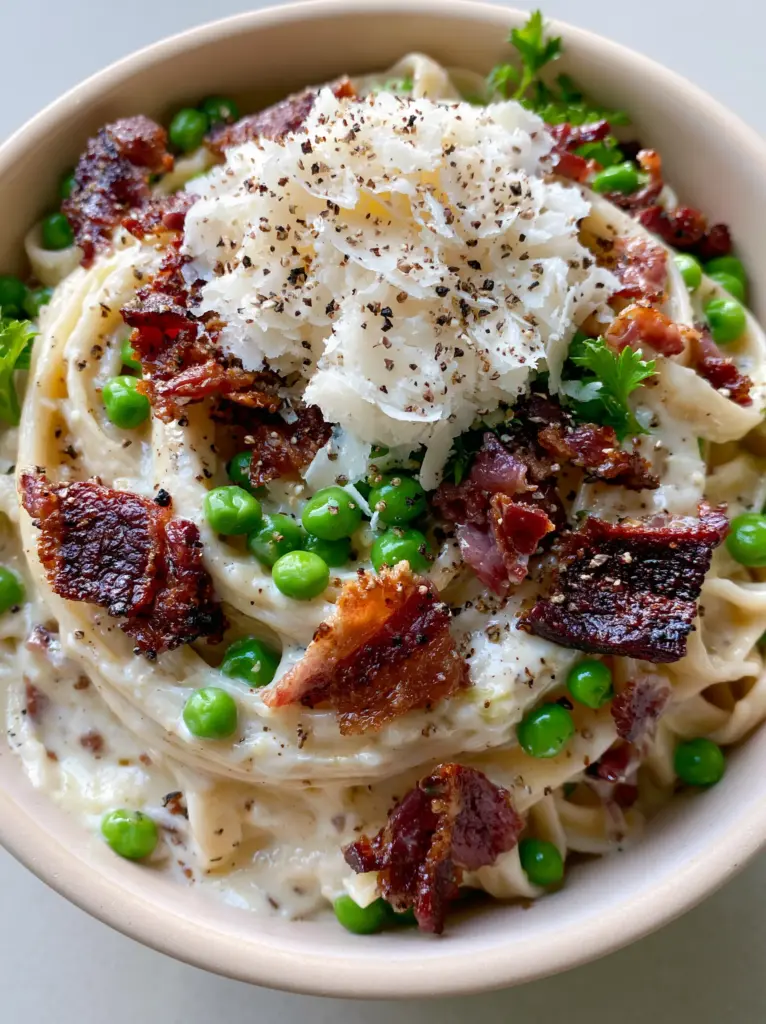
When you look at this dish, the first thing you notice is the extreme contrast. The matte cream ceramic of the bowl serves as the perfect canvas for the snowy, microplaned parmesan and the aggressive, coarse flakes of cracked black pepper that crown the nest of fettuccine.
Every strand of pasta is meticulously coated in a garlic-infused cream that pools slightly at the bottom, inviting you to swirl each forkful through the liquid gold. This is the kind of recipe that turns a simple Tuesday night into a gourmet experience, utilizing foundational culinary techniques to achieve visual and flavorful perfection.
The Aesthetic and Flavor Profile of This Creamy Delight
- Visual Textures: Deeply browned, irregular chunks of thick-cut bacon provide a rustic, mahogany contrast to the bright green, plump sweet peas.
- Sauce Consistency: A thick, glistening, and silky white garlic parmesan cream that clings to the al dente fettuccine without being cloying.
- Aromatic Garnishes: A mountain of fluffy, snowy-white parmesan cheese and large flakes of cracked black pepper provide a sensory explosion of scent and heat.
- Structural Integrity: The use of al dente fettuccine ensures the pasta holds its “nest” shape, standing tall in the bowl rather than slumping into the sauce.
Sourcing the Foundation: Ingredients for the Perfect Pasta
Fettuccine: 1 lb (454g) of high-quality semolina fettuccine. The wide ribbons provide the ideal surface area for the glossy cream sauce to adhere to, ensuring every bite is balanced.
Thick-Cut Bacon: 8 oz (227g) of thick-cut bacon, sliced into irregular chunks. Using thick-cut variety allows for a chewy interior and a crispy, mahogany-colored exterior that won’t get lost in the sauce.
Sweet Green Peas: 1.5 cups (225g) of fresh or frozen sweet peas. These provide a vibrant green hue and a necessary sweetness to cut through the richness of the parmesan cream.
Heavy Cream: 1.5 cups (355ml) of high-fat heavy cream. This is the vehicle for our sauce, providing the luxurious mouthfeel and glistening sheen seen in the visual blueprint.
Parmesan Cheese: 1 cup (90g) of freshly grated parmesan for the sauce, plus extra for the “snowy” topping. Use a microplane to achieve the fluffy, airy texture that melts instantly on the tongue.
Fresh Garlic: 4 cloves (approx. 20g), finely minced. Sautéing the garlic in the bacon fat creates a foundational aromatic layer that defines the savory profile of the dish.
Unsalted Butter: 2 tbsp (30g). Butter helps to emulsify the sauce and adds a professional-grade gloss that oil alone cannot achieve.
Fresh Parsley: 2 tbsp (5g) of flat-leaf parsley sprigs. These tiny sprigs add a pop of color and a fresh, herbaceous finish to the rich, salty elements.
Cracked Black Pepper: 1 tsp (2g) of very coarsely cracked peppercorns. Large flakes provide a visual “pop” and a punchy heat that balances the dairy.
Kosher Salt: For the pasta water and seasoning. Properly salted water is the only chance you have to season the pasta itself from the inside out.
Essential Tools for Culinary Success
To achieve the precise textures described in our visual guide, you will need a few specific kitchen tools. A heavy-bottomed skillet is non-negotiable for rendering the bacon to that deep mahogany color without burning the fats.
You will also need a high-quality stainless steel pot to boil your fettuccine. This ensures even heat distribution and enough space for the pasta to move, preventing the strands from sticking together.
Finally, a microplane grater is the secret to that “mountain of snowy cheese.” Traditional graters produce shards that are too heavy; a microplane creates the light, fluffy volume that makes the dish look like it came from a high-end trattoria.
Mastering the Technique: How to Make Bacon and Pea Pasta
1. Rendering the Mahogany Bacon Chunks
Start by placing your irregular bacon chunks into a cold skillet. Turn the heat to medium and allow the fat to render slowly; this process ensures the bacon becomes crispy and “deeply browned” rather than just charred.
Once the bacon has reached a mahogany hue and is sufficiently crispy, remove the chunks with a slotted spoon and place them on a paper towel. Keep about 1 tablespoon of the rendered fat in the pan for the next steps.
2. Preparing the Al Dente Fettuccine
Bring a large pot of water to a rolling boil and season it heavily with salt—it should taste like the sea. Add the fettuccine and cook for 1-2 minutes less than the package directions suggest.
We want the pasta “al dente,” meaning it still has a slight bite in the center. Before draining, reserve 1 cup (240ml) of starchy pasta water; this is a critical “invisible” ingredient for emulsifying your Bacon and Pea Pasta sauce.
3. Crafting the Silk Garlic Parmesan Sauce
In the same skillet used for the bacon, melt the butter into the residual bacon fat over medium-low heat. Add the minced garlic and sauté until fragrant, being careful not to let it brown, as burnt garlic will turn the sauce bitter.
Pour in the heavy cream and bring to a gentle simmer. Allow it to reduce slightly for 3-4 minutes until it begins to thicken. Whisk in the 1 cup of parmesan cheese gradually, ensuring it melts into a smooth, glistening white sauce.
4. The Emulsion and Final Assembly
Add the al dente fettuccine and the steamed green peas directly into the skillet with the sauce. Toss vigorously, adding splashes of the reserved pasta water as needed to create a glossy, silky coating that pools slightly at the bottom.
Fold in half of the crispy bacon chunks. The heat from the pasta will slightly soften the peas while maintaining their “vibrant, plump” appearance and bright green color.
Expert Tips for a Professional Finish
- The Pasta Water Secret: Never skip reserving your pasta water. The starch acts as a bridge between the fats in the cream/cheese and the water, preventing the sauce from breaking or becoming oily.
- Pea Preservation: If using frozen peas, simply thaw them under warm water or add them to the pasta water for the last 30 seconds of cooking to keep them bright and plump.
- Temperature Control: When adding the parmesan to the cream, keep the heat low. High heat can cause the proteins in the cheese to clump, ruining that “silk” texture we are aiming for.
- Freshly Cracked Pepper: Use a pepper mill on the coarsest setting or crush whole peppercorns with the bottom of a heavy pan to get those large, visible flakes.
What to Serve with Creamy Pasta
Because this Bacon and Pea Pasta is incredibly rich and savory, it pairs beautifully with side dishes that offer a bit of acidity or brightness. A light green salad with a lemon vinaigrette is a classic choice.
If you enjoy a bit of variety in your weekly meal prep, you might also enjoy exploring other textured pasta dishes like a Creamy Cajun Pasta or a savory Caramelized Onion Pasta.
For those looking for more seasonal inspiration, our collection of summer pasta recipes offers lighter alternatives that utilize fresh garden produce. However, for a comforting, high-impact meal, this bacon and pea combination remains a top-tier choice among quick recipes.
Frequently Asked Questions
Cream-based pastas are best served fresh. However, you can store leftovers for up to 2 days. When reheating, add a splash of milk or water to the pan to loosen the sauce and restore its glossy texture.
Yes! Frozen peas work perfectly. To maintain their vibrant green color and plump texture, add them to the boiling pasta water during the last 30-60 seconds of cooking, or simply thaw them under warm water before tossing into the sauce.
The secret is starting the bacon in a cold skillet over medium heat. This allows the fat to render out slowly, which fries the meat evenly until it reaches a deep, mahogany brown while remaining crispy.
While fettuccine is ideal for its surface area, linguine or tagliatelle are excellent substitutes. If you prefer short pasta, penne or fusilli will also catch the peas and sauce well.
Sauce separation usually happens if the heat is too high when adding cheese or if you haven’t used enough pasta water. The starchy pasta water acts as an emulsifier to keep the garlic parmesan sauce silky and glossy.
The Complete Bacon and Pea Pasta Recipe
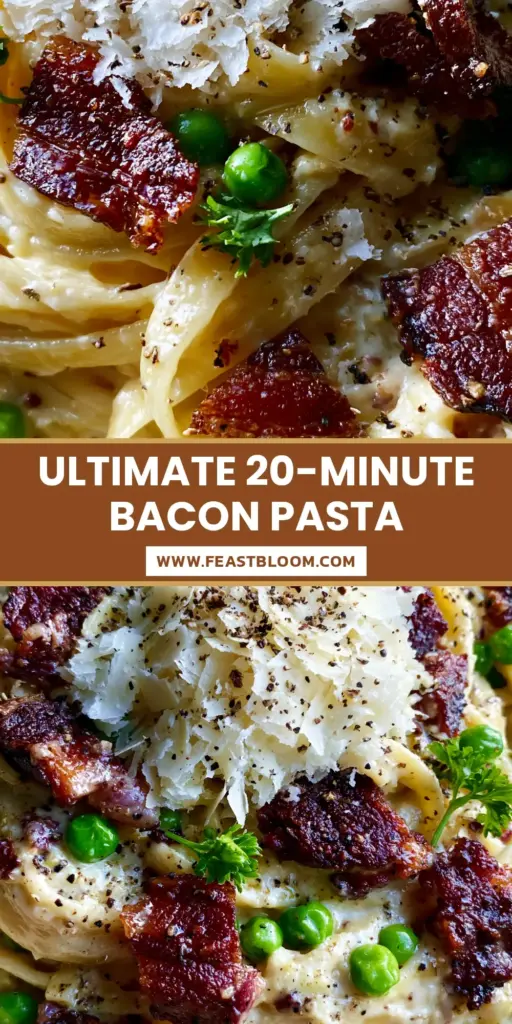
Bacon and Pea Pasta with Glossy Garlic Parmesan Cream Sauce
Ingredients
Equipment
Method
- Add bacon chunks to a cold skillet and cook over medium heat until crispy and mahogany brown. Remove and drain on paper towels.
- Cook fettuccine in salted boiling water until al dente. Reserve 1 cup of pasta water and drain.
- In the same skillet, melt butter into 1 tbsp of bacon fat. Sauté minced garlic until fragrant.
- Stir in heavy cream and simmer until slightly reduced. Whisk in parmesan until a silky sauce forms.
- Toss the pasta and peas into the sauce. Add pasta water as needed for gloss. Top with bacon, snowy parmesan, pepper, and parsley.
Notes
Use a microplane for the parmesan to get that snowy, fluffy texture described in the visual.
Sharing the Love for Home Cooking
Creating a restaurant-quality meal like this Bacon and Pea Pasta at home is an incredibly rewarding experience. The combination of smoky bacon, sweet peas, and that luxurious garlic parmesan sauce creates a symphony of flavors that is hard to beat.
If you enjoyed this recipe, please leave a comment below and let us know how yours turned out! Don’t forget to follow us and share your creations on Pinterest so we can see your beautiful pasta nests. Happy cooking!