There is nothing quite like the aromatic steam rising from a fresh bowl of Thai red curry noodle soup. This dish isn’t just a meal; it’s a sensory experience that begins the moment the red curry paste hits the hot oil, blooming into a fragrant base. The result is a striking, rustic ceramic bowl filled with a rich, orange-red broth that looks just as incredible as it tastes.
Imagine a velvety coconut red curry broth, its surface shimmering with tiny, glossy red chili oil droplets that catch the light. Nestled within are translucent thin rice noodles, tender poached chicken slices, and crisp red bell pepper strips. Every spoonful offers a balance of creamy, spicy, and savory notes, elevated by the bright crunch of crushed peanuts and the zing of fresh lime.
Whether you are looking for a comforting weeknight meal or a restaurant-quality dish to impress guests, this Thai red curry noodle soup delivers. It bridges the gap between a light summer soup recipe and a hearty winter warmer. Let’s dive into the culinary science of achieving that perfect velvety texture and vibrant visual appeal.
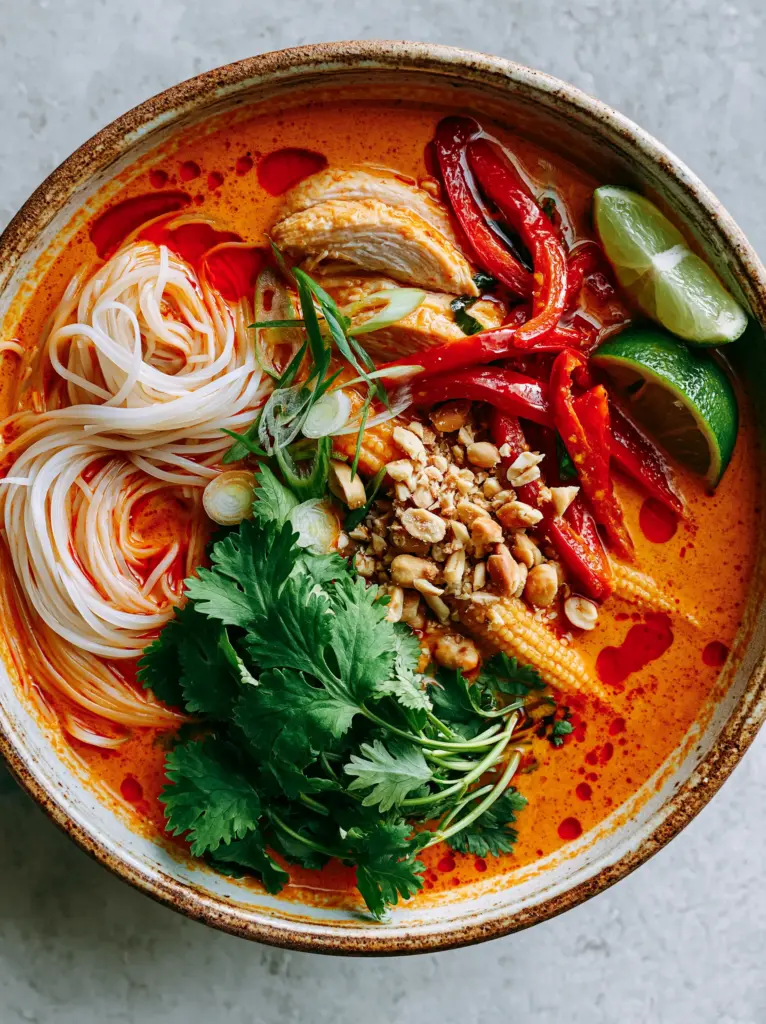
Why This Creamy Curry Noodle Soup Works
- Visual Masterpiece: The contrast between the bright green cilantro, the deep red broth, and the white rice noodles creates a stunning professional presentation.
- Textural Harmony: We combine tender poached chicken with the snap of baby corn and the crunch of toasted peanuts for a multi-dimensional mouthfeel.
- Authentic Flavor Profile: By blooming the curry paste and using full-fat coconut milk, we achieve a depth of flavor that mimics traditional Thai street food.
- Speed and Efficiency: Despite its complex appearance, this is one of those quick recipes that comes together in under 30 minutes.
Essential Components for the Perfect Red Curry Base
Thai Red Curry Paste: 3 tbsp (45g). This is the heartbeat of the dish; look for brands that include lemongrass and galangal for an authentic punch.
Full-Fat Coconut Milk: 1 can (400ml). To achieve the “velvety” consistency described in our blueprint, full-fat is non-negotiable as it provides the necessary emulsification.
Chicken Broth: 3 cups (720ml). Use a high-quality stock to provide a savory foundation for the coconut and spice layers.
Thin Rice Noodles: 6 oz (170g). Also known as vermicelli, these translucent strands absorb the broth perfectly without becoming mushy.
Chicken Breast: 1 lb (450g). We poach the slices directly in the broth to ensure they remain succulent, tender, and white.
Red Bell Pepper: 1 large (150g). Sliced into thin strips, these provide a vibrant “pop” of color and a mild sweetness to balance the heat.
Baby Corn: 1/2 cup (75g). These add a unique architectural element to the bowl and a satisfying, crisp-tender bite.
Fish Sauce: 1 tbsp (15ml). This “invisible” foundational ingredient provides the essential salty, umami backbone required in Thai cuisine.
Coconut Oil: 1 tbsp (15g). Used for searing the paste, it complements the coconut milk and helps create those signature oil droplets.
Professional Tools for Culinary Success
To achieve the best results, I recommend using a heavy-bottomed stainless steel pot. This ensures even heat distribution when blooming the curry paste, preventing the delicate aromatics from burning. You will also need a sharp chef’s knife for precision-cutting the red bell pepper strips and scallions to match the visual blueprint.
The Step-by-Step Path to Velvety Perfection
Blooming the Aromatics and Creating the Oil Gloss
Heat the coconut oil in your pot over medium heat. Add the red curry paste and stir constantly for 2 minutes. You are looking for the “oil to separate,” a visual cue where the paste becomes fragrant and tiny red droplets begin to shimmer. This step is crucial for achieving the glossy red chili oil droplets mentioned in our visual prompt.
Building the Velvety Coconut Foundation
Slowly pour in half of the coconut milk while whisking. This creates an emulsion, ensuring the broth is velvety and smooth rather than broken. Add the remaining coconut milk, chicken broth, fish sauce, and a pinch of salt. Bring the liquid to a gentle simmer—never a rolling boil, as high heat can curdle the coconut fats.
Poaching the Chicken and Vegetables
Add the thinly sliced chicken breast, red bell pepper strips, and baby corn to the simmering broth. The chicken will poach gently, remaining “tender and white” as specified. This process takes about 5-7 minutes. If you enjoy this poaching technique, you might also love the texture of the chicken in our spicy chicken ramen soup.
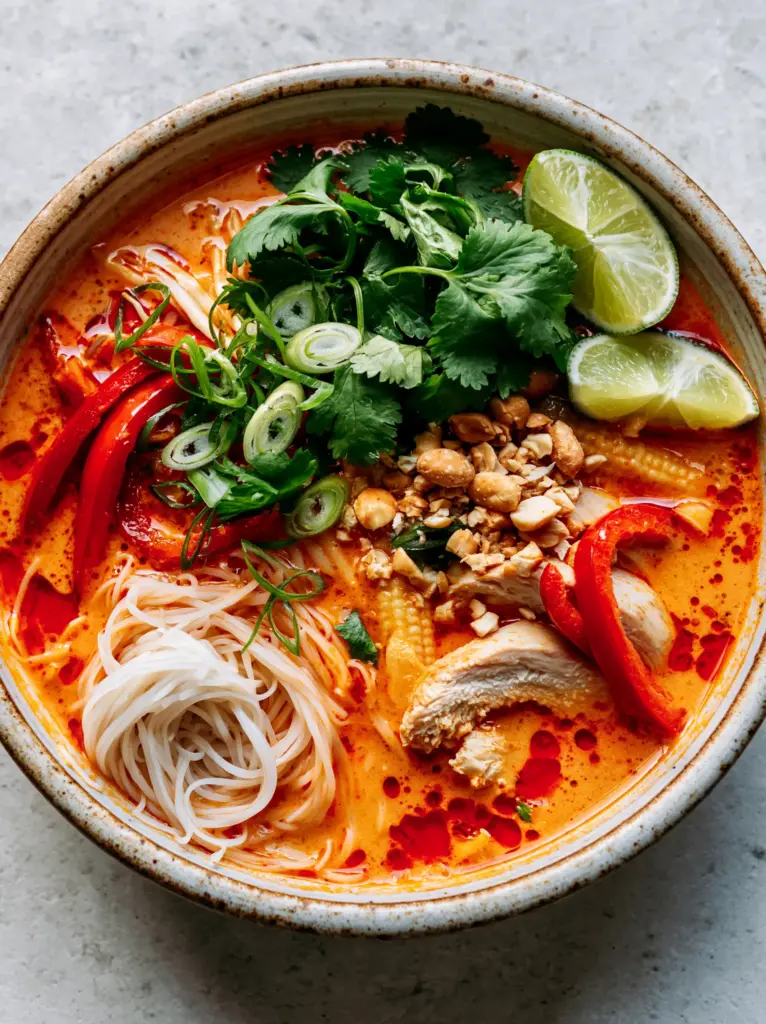
Preparing the Rice Noodle Nests
While the soup simmers, soak the thin rice noodles in a separate bowl of hot water for 3-5 minutes until translucent and pliable. Drain them well. Dividing the noodles into “nests” in the individual bowls before pouring the soup over them prevents the noodles from overcooking and keeps the broth clear.
Expert Tips for a Five-Star Presentation
- The “Gloss” Factor: If your broth isn’t shimmering enough, drizzle a teaspoon of toasted chili oil over each bowl just before serving to recreate that bright red droplet effect.
- Noodle Management: Never cook the rice noodles directly in the soup for long periods, or they will soak up all the velvety broth.
- Squeeze for Balance: Always serve with fresh lime wedges on the rim. The acidity cuts through the richness of the coconut milk, brightening the entire dish.
- Peanut Texture: Crush your toasted peanuts just before serving to ensure they stay “crisp” and don’t become soggy in the steam.
Storage and Reheating Advice
Thai red curry noodle soup is best enjoyed fresh. However, if you have leftovers, store the broth and noodles in separate airtight containers in the refrigerator for up to 3 days. When reheating, do so gently on the stovetop. If the broth has thickened too much, splash in a little extra chicken broth to restore that velvety orange-red consistency.
What to Serve with Thai Curry Soup
To balance the spicy heat of the Thai red curry noodle soup, I highly recommend a cooling drink like a cucumber lime spritzer or a traditional Thai iced tea. For a multi-course Thai-inspired dinner, start with some light spring rolls or a side of jasmine rice if you prefer more starch to soak up the creamy broth.
Frequently Asked Questions
Yes! Chicken thighs are excellent in this soup. They have a slightly higher fat content which adds to the richness, though they may take 2-3 minutes longer to poach until fully cooked.
The heat level is controlled by the red curry paste. Use 2 tablespoons for a mild heat or 4+ tablespoons for a more intense kick. You can also add fresh Thai bird’s eye chilies for extra spice.
Generally, yes. Rice noodles and most red curry pastes are gluten-free. However, always check the label on your fish sauce and curry paste to ensure no wheat-based thickeners were used.
If you need a substitute, use an equal amount of soy sauce or tamari mixed with a pinch of salt. This provides the necessary saltiness, though it will lack the traditional pungent depth of fish sauce.
Curdling usually happens if the broth reaches a violent, rolling boil. To keep the broth velvety and smooth, maintain a gentle simmer and use full-fat coconut milk, which is more stable than light versions.
The Ultimate Thai Red Curry Noodle Soup Recipe
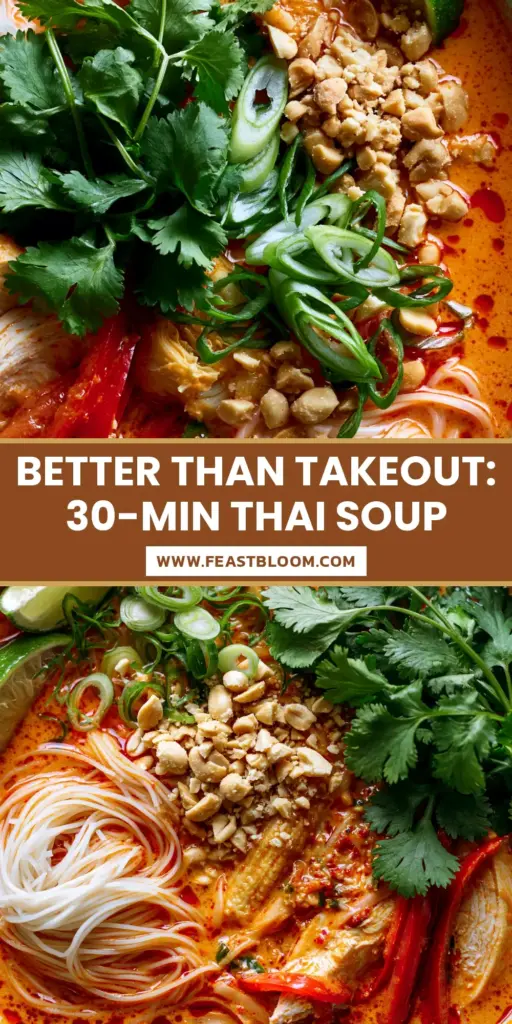
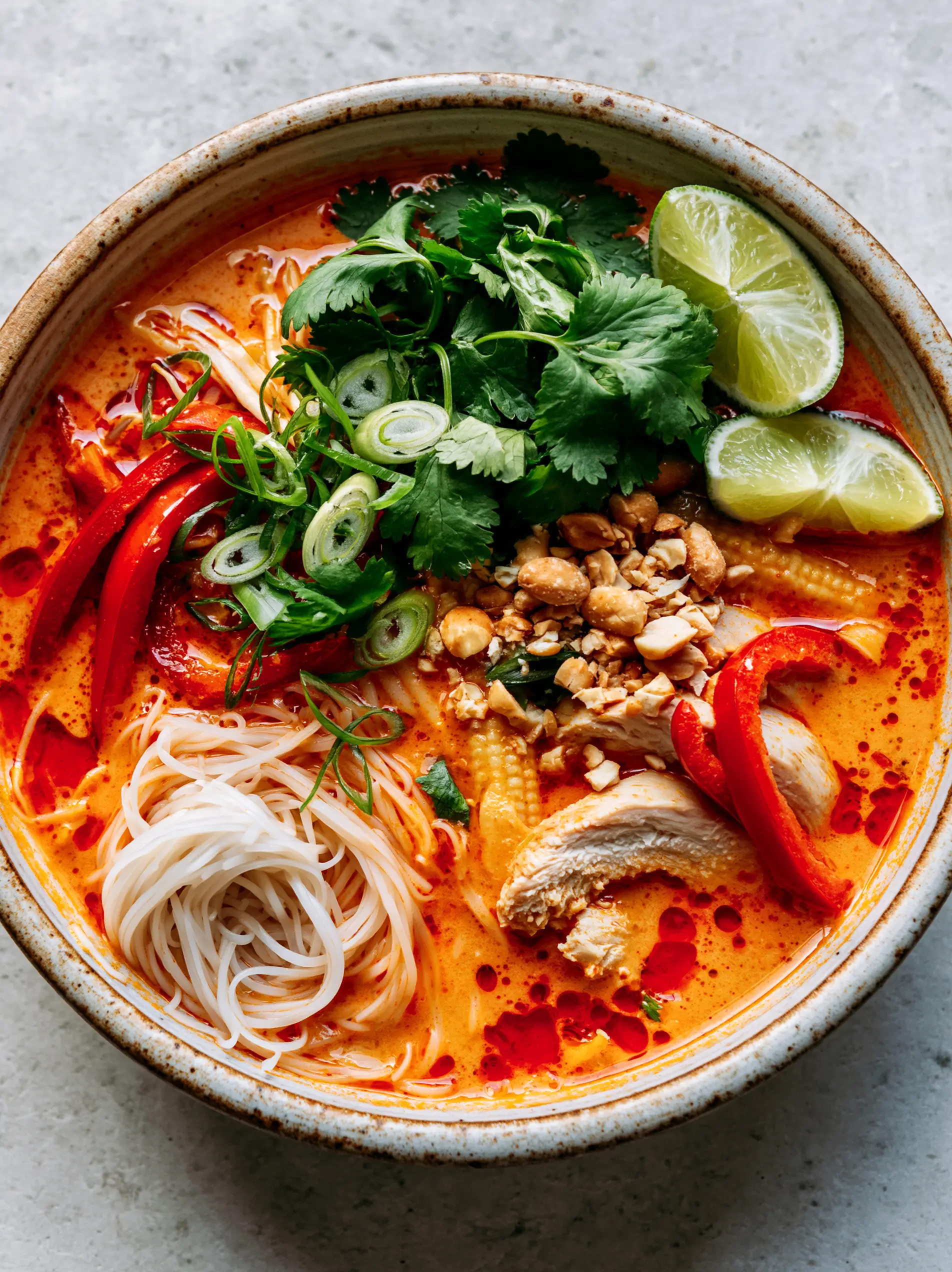
Thai Red Curry Noodle Soup with Velvety Coconut Broth and Poached Chicken
Ingredients
Equipment
Method
- Heat coconut oil in a stainless steel pot over medium heat. Add red curry paste and cook for 2 minutes, stirring constantly until fragrant and red oil droplets begin to shimmer.
- Slowly whisk in half of the coconut milk to create a smooth emulsion. Add the remaining coconut milk, chicken broth, and fish sauce. Bring to a gentle simmer.
- Add the sliced chicken breast, bell pepper strips, and baby corn to the simmering liquid. Cook for 5-7 minutes until the chicken is tender and white.
- Soak rice noodles in hot water for 3-5 minutes until translucent. Drain and divide into bowls.
- Ladle the hot soup over the noodles. Garnish with a cluster of fresh cilantro, sliced scallions, and crushed peanuts. Serve with lime wedges on the rim.
Notes
Bloom the curry paste until you see the oil separate for the best flavor and appearance.
Closing & Call to Action
This Thai red curry noodle soup is a testament to how simple ingredients can create a visually stunning and flavor-packed meal. By following these steps, you can recreate the velvety texture and shimmering chili oil finish of a professional kitchen right at home. If you enjoyed this recipe, please leave a comment below and share your photos with us on Pinterest. Don’t forget to sign up for our newsletter for more restaurant-quality recipes delivered to your inbox!