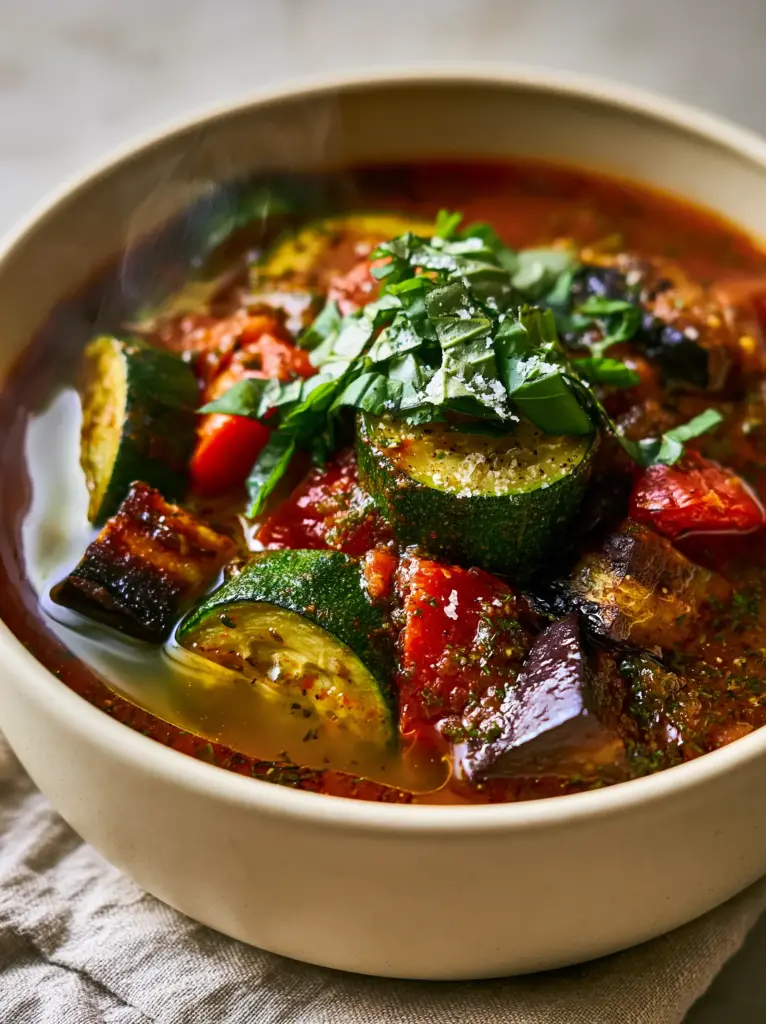
There is something inherently soul-warming about a chunky ratatouille soup that captures the very essence of a sun-drenched Mediterranean garden. Unlike traditional stews that can feel heavy, this vibrant soup offers a bright, herb-flecked experience that feels both indulgent and incredibly light. Every spoonful is a celebration of texture, from the softened purple eggplant cubes to the tender green zucchini rounds, all submerged in a rich, fire-roasted tomato broth.
Imagine a steaming, rustic bowl served on a neutral linen napkin, the gentle morning light catching the glossy drizzle of extra virgin olive oil on the surface. This isn’t just a meal; it’s a sensory experience that brings the aesthetic of a professional food shoot right to your kitchen table. Whether you are looking for a comforting weeknight dinner or a stunning centerpiece for a weekend brunch, this recipe delivers on every visual and culinary promise.
By focusing on the Maillard reaction through high-heat roasting, we transform humble vegetables into charred, flavor-packed morsels. This technique ensures that the eggplant doesn’t just disappear into the broth but retains its structural integrity and smoky depth. Let’s dive into how to create this handheld-smartphone-photo-worthy masterpiece that tastes even better than it looks.
Why You Will Fall in Love With This Provencal-Inspired Bowl
- Charred Depth of Flavor: Unlike standard vegetable soups, we roast our eggplant and peppers to achieve those signature charred edges that provide a smoky, caramelized undertone.
- Vibrant Visual Appeal: The contrast between the deep purple eggplant, bright green zucchini, and rich red bell peppers creates a stunning color palette in every bowl.
- Textural Harmony: We balance softened cubes with tender rounds and chunky fire-roasted tomatoes, ensuring a satisfying “bite” that keeps you coming back for more.
- Clean & Nutritious: Packed with antioxidants and vitamins, this recipe is a powerhouse of nutrition without sacrificing the “comfort food” factor.
The Garden-Fresh Essentials for Your Soup Pot
Achieving the perfect ratatouille soup requires a balance of fresh produce and high-quality pantry staples. Each ingredient plays a specific role in building the layers of flavor and the specific visual textures described in our blueprint.
Roasted Eggplant Cubes: 1 large eggplant (approx. 1 lb / 450g), cut into 1-inch (2.5cm) cubes. The eggplant acts as a sponge for the broth while providing a silky, buttery texture once roasted and simmered.
Sliced Zucchini Rounds: 2 medium zucchini (approx. 10 oz / 280g), sliced into 1/4-inch (6mm) rounds. These provide a beautiful green pop and a tender-crisp mouthfeel that defines a classic ratatouille.
Diced Red Bell Peppers: 2 large peppers (approx. 10 oz / 280g), seeded and chopped into 1-inch (2.5cm) pieces. Roasting these brings out their natural sugars, adding a necessary sweetness to balance the acidic tomatoes.
Fire-Roasted Tomato Chunks: 1 can (28 oz / 794g) fire-roasted diced tomatoes. Using fire-roasted varieties adds immediate depth and mimics the charred aesthetic we are striving for.
Minced Garlic Cloves: 4 large cloves (approx. 12g), finely minced. Garlic provides the aromatic backbone that bridges the gap between the earthy vegetables and the herbal broth.
Extra Virgin Olive Oil: 4 tbsp (60ml), divided. You need a high-quality oil for both roasting the vegetables and for that final glossy drizzle that catches the light on the surface of the soup.
Fresh Basil and Thyme: 1/2 cup (15g) fresh basil leaves and 4 sprigs of fresh thyme. The thyme simmers in the broth for earthy depth, while the torn basil adds a bright, peppery finish as a garnish.
The Seasoning Foundation: 1 tsp (6g) sea salt flakes and 1/2 tsp (2g) cracked black pepper. Flaky sea salt is essential for the final garnish to provide that professional, high-resolution finish.
Rich Tomato-Herb Broth: 4 cups (960ml) high-quality vegetable stock mixed with 1 tbsp (15g) tomato paste. This creates a deep, red submerged environment for our vibrant vegetables.
Professional Tools for a Flawless Execution
To achieve the specific textures mentioned—particularly those charred edges—you will need a few key pieces of kitchen equipment. Using a high-quality stainless steel pot is recommended for even heat distribution during the simmering phase.
You will also need two large rimmed baking sheets to roast the vegetables. Crowding the eggplant and zucchini on a single tray will cause them to steam rather than roast, preventing those beautiful charred edges from forming. A sharp chef’s knife is also vital for ensuring your zucchini rounds are uniform and your eggplant cubes are consistent in size.
Step-by-Step: Crafting the Perfect Ratatouille Soup
Phase 1: Achieving the Signature Charred Roast
Preheat your oven to 425°F (220°C). Arrange the eggplant cubes on one baking sheet and the zucchini rounds and red pepper chunks on another. Drizzle both with 2 tbsp (30ml) of olive oil and season generously with salt and pepper.
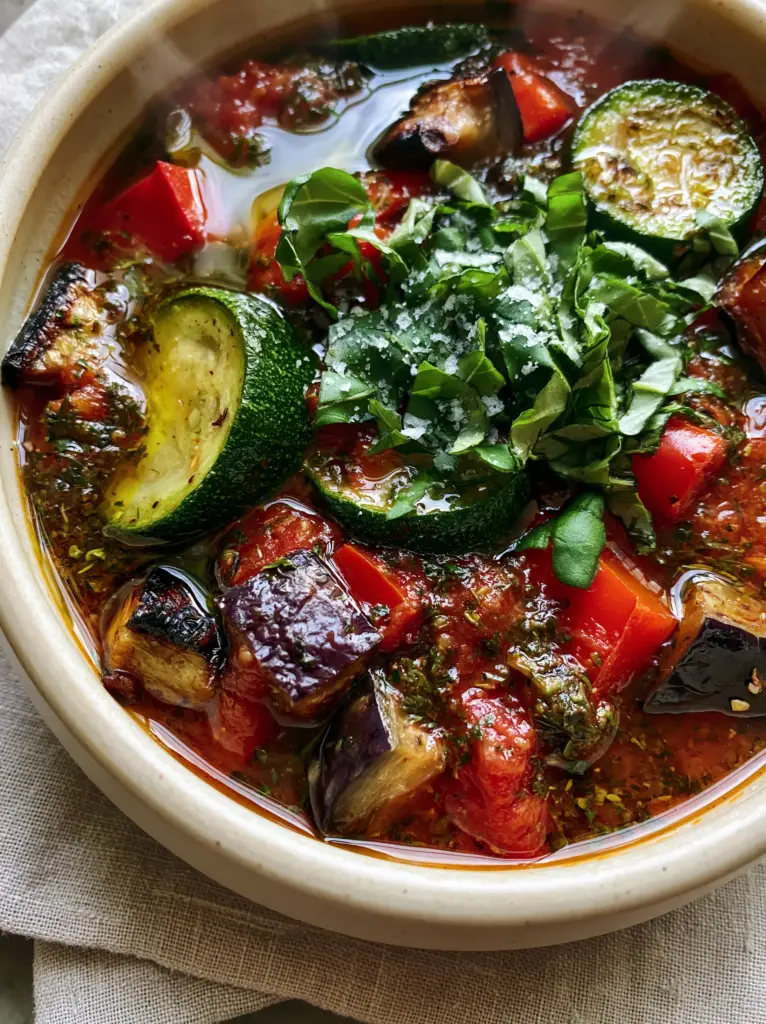
Roast for 20-25 minutes, tossing halfway through. You are looking for a visual cue: the eggplant should be softened and starting to brown, while the zucchini should have visible charred spots on the edges. This step is non-negotiable for achieving the “rustic” look of our ratatouille soup.
Phase 2: Building the Aromatic Base
While the vegetables roast, place your heavy-bottomed pot over medium heat. Add the remaining 1 tbsp (15g) of oil and sauté the minced garlic until it is fragrant and golden, which usually takes about 1-2 minutes. Be careful not to burn the garlic, as this will introduce bitterness to your rich tomato-herb broth.
Stir in the tomato paste and cook for another minute to “cook out” the raw flavor, then add the fire-roasted tomato chunks and the sprigs of thyme. This creates the foundational flavor for what is arguably one of the best summer soup recipes in your repertoire.
Phase 3: The Simmer and Merge
Pour in the vegetable broth and bring the mixture to a gentle boil. Once boiling, reduce the heat to low. Carefully fold in your roasted eggplant, zucchini, and peppers. Let the soup simmer for 10-15 minutes. This allows the vegetables to absorb the herb-flecked broth without becoming mushy.
Listen for the gentle bubbling sound—a rhythmic simmer that indicates the flavors are marrying perfectly. The broth should thicken slightly and take on a rich, vibrant red hue from the combination of roasted juices and tomato solids.
Expert Tips for Culinary Success
- Don’t Skip the Salt: Eggplant contains a lot of moisture. If you find yours is particularly bitter, salt the cubes 20 minutes before roasting and pat them dry to ensure they crisp up beautifully.
- Fresh vs. Dried Herbs: While dried thyme can work in a pinch, fresh basil is mandatory for the garnish. The visual of “generous torn basil leaves” is what elevates this from a simple meal to a gourmet experience.
- Acid Balance: If your soup feels like it’s missing a “spark,” add a teaspoon of balsamic vinegar at the very end. This brightens the tomato notes significantly.
- Uniform Cutting: For the most professional look, try to keep your eggplant cubes exactly the same size as your red pepper chunks. This ensures even cooking and a balanced spoonful.
Storage, Reheating, and Make-Ahead Advice
This ratatouille soup is one of those rare dishes that actually tastes better the next day. As the soup sits, the roasted vegetables continue to infuse the broth with their smoky sweetness. Store leftovers in an airtight container in the refrigerator for up to 4 days.
When reheating, do so gently on the stovetop over medium-low heat. Avoid boiling the soup vigorously again, as this can break down the zucchini rounds. If you plan to freeze this soup, it will last for up to 3 months, though the zucchini may lose a bit of its firmness upon thawing.
What to Serve with Your Rustic Ratatouille
To complete the Mediterranean vibe, serve this soup with a thick slice of crusty sourdough bread or a side of fresh salsa and chips for a fusion twist. If you are looking for a more substantial meal, this soup pairs beautifully as a starter for classic stuffed peppers.
For those who love a variety of flavors, consider adding this to a rotation of quick recipes for busy weeknights. It’s light enough to be served alongside a fresh salad but hearty enough to stand alone with a sprinkle of parmesan cheese or a dollop of pesto.
Frequently Asked Questions
Absolutely. White beans (like Cannellini) or cooked chickpeas pair beautifully with these Mediterranean flavors without altering the soup’s rustic aesthetic.
While you can sauté them, roasting is essential for achieving the charred edges and deep, caramelized flavor described in this recipe. Roasting also prevents the eggplant from becoming mushy.
Roasting at a high temperature (425°F/220°C) and ensuring the cubes are spread out on the baking sheet will keep the eggplant structurally sound and give it a meaty texture.
Yes, this recipe is naturally vegan and gluten-free, provided you use a high-quality vegetable broth.
A traditional ratatouille is a thick vegetable stew. The soup version uses the same vegetable base but adds a rich tomato-herb broth to create a lighter, spoonable consistency.
The Ultimate Ratatouille Soup Recipe
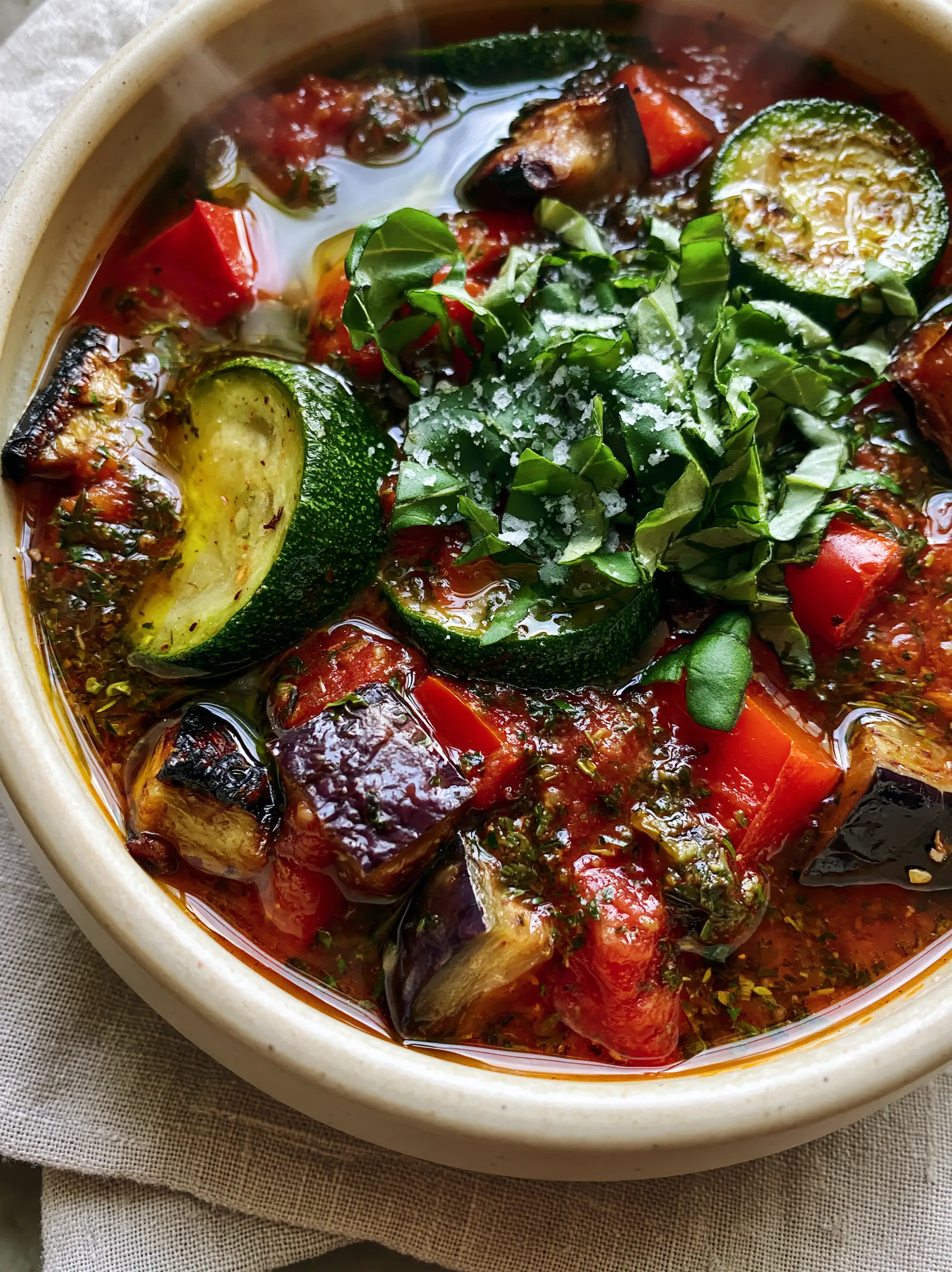
Ratatouille Soup: A Rustic Roasted Vegetable Feast in a Bowl
Ingredients
Equipment
Method
- Preheat oven to 425°F (220°C). Toss eggplant, zucchini, and peppers with 2 tbsp oil, salt, and pepper on two baking sheets.
- Roast for 20-25 minutes until eggplant is softened and zucchini edges are visibly charred.
- In a stainless steel pot, sauté garlic in 1 tbsp oil until golden. Stir in tomato paste and fire-roasted tomatoes.
- Add broth and thyme; bring to a boil. Reduce heat and fold in the roasted vegetables.
- Simmer for 10 minutes. Serve in bowls topped with torn basil, a drizzle of olive oil, and sea salt flakes.
Notes
Ensure you don't crowd the baking sheets or the vegetables will steam instead of roasting.
Final Thoughts on This Provencal Classic
Creating a visually stunning and culinarily sound ratatouille soup is all about respecting the individual ingredients. By roasting the vegetables to achieve those charred edges and finishing the dish with a glossy drizzle of oil and fresh basil, you create a bowl that is as beautiful as it is delicious. This recipe proves that healthy eating doesn’t have to be boring—it can be rustic, vibrant, and incredibly satisfying.
If you enjoyed this journey into Mediterranean flavors, please leave a comment below and let us know how your roast turned out! Don’t forget to share your own “handheld smartphone photos” of the finished dish and follow us on Pinterest for more culinary inspiration.