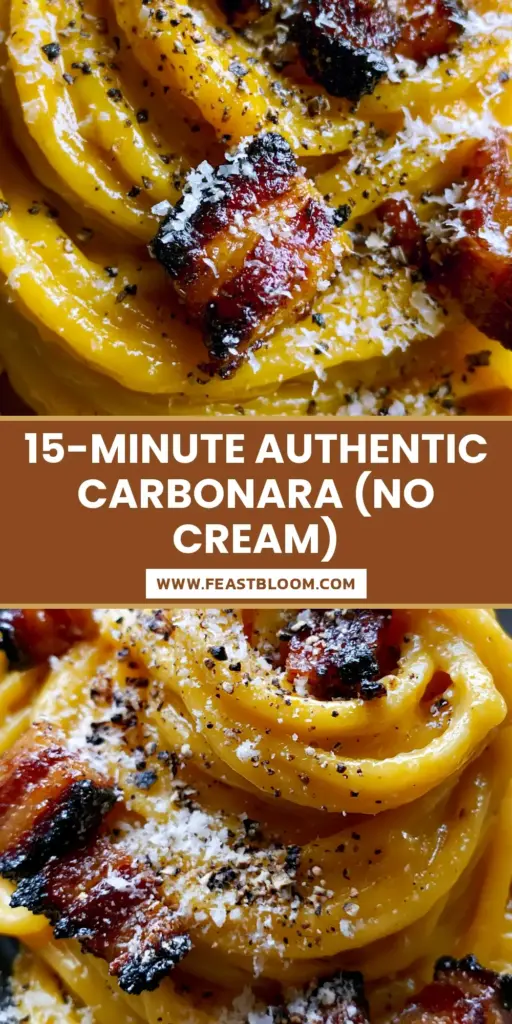
When you close your eyes and imagine the perfect Carbonara recipe, what do you see? You see a tall, elegant nest of spaghetti, glistening under a vibrant golden yellow sauce that clings to every strand with mathematical precision.
There is no cream in sight, only the luxurious emulsion of farm-fresh egg yolks and sharp, salty Pecorino Romano. The aroma of deep, mahogany-seared guanciale fills the kitchen, its rendered fat serving as the silent conductor for this Roman symphony.
This Carbonara recipe isn’t just a meal; it’s a masterclass in culinary physics. We are aiming for a specific visual result: thick, glossy sauce, crispy cubes of pork, and a dusting of cheese that looks like fresh Alpine snow against a matte charcoal backdrop.
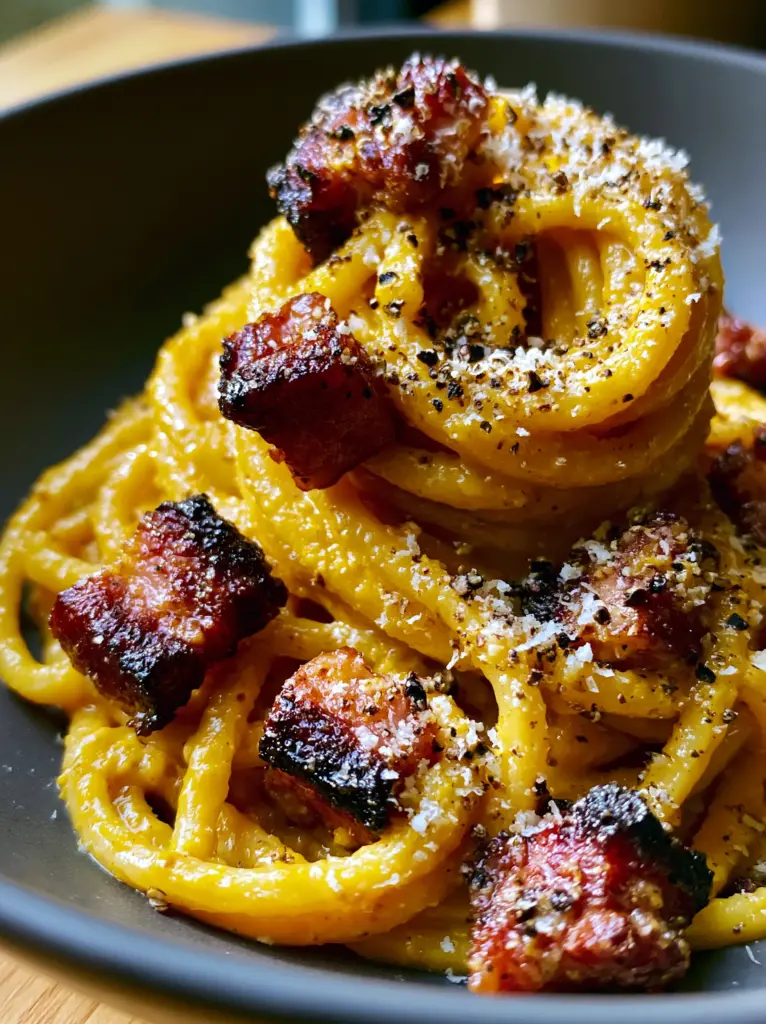
The Visual Anatomy of a World-Class Carbonara
- The Emulsion: A vibrant, sun-drenched yellow sauce that is thick and incredibly glossy, never watery or pooling at the base.
- The Texture: Perfectly al dente spaghetti coils that provide a firm “bite” to contrast the silkiness of the sauce.
- The Pork: Thick-cut cubes of guanciale seared until the edges reach a deep mahogany crunch, releasing savory, smoky fat.
- The Finish: A heavy dusting of finely microplaned Pecorino Romano and a volcanic eruption of coarsely cracked black pepper.
The Essential Italian Pantry for Authentic Results
To achieve the result seen in our visual blueprint, you cannot compromise on the quality of your ingredients. While many weeknight quick recipes allow for substitutions, this dish relies on the chemical interaction of specific fats and proteins.
Spaghetti (500g / 1.1 lbs): Look for bronze-die extruded pasta. The rough surface is essential for the glossy sauce to “clinch” to the noodles rather than sliding off.
Guanciale (200g / 7 oz): This cured pork jowl is the soul of the dish. It provides a funky, peppery depth and a superior fat-to-meat ratio compared to the lighter profiles found in bacon and pea pasta.
Pecorino Romano (100g / 3.5 oz): This sheep’s milk cheese is sharp and salty. We will grate it finely to create that “snow” effect that melts instantly into the egg yolks.
Large Egg Yolks (4-5 plus 1 whole egg): The yolks provide the “vibrant golden yellow” color mentioned in our prompt. Room temperature eggs are non-negotiable for a smooth emulsion.
Whole Black Peppercorns: Do not use pre-ground pepper. You need the spicy, floral oils of freshly, coarsely cracked kernels to cut through the richness of the fats.
Kosher Salt: Used exclusively for the pasta water. Remember, the cheese and pork are already highly saline, so we season the water like the sea but leave the sauce alone.
The Critical Equipment for Heat Management
Managing residual heat is the difference between a silky sauce and scrambled eggs. You will need a large sturdy stainless steel pot to boil the spaghetti and a wide skillet for the guanciale.
Crucially, you need a microplane grater to achieve the “light snow” cheese texture. A heavy-bottomed charcoal ceramic bowl is recommended for serving, as it retains heat and provides the matte contrast that makes the golden pasta pop visually.
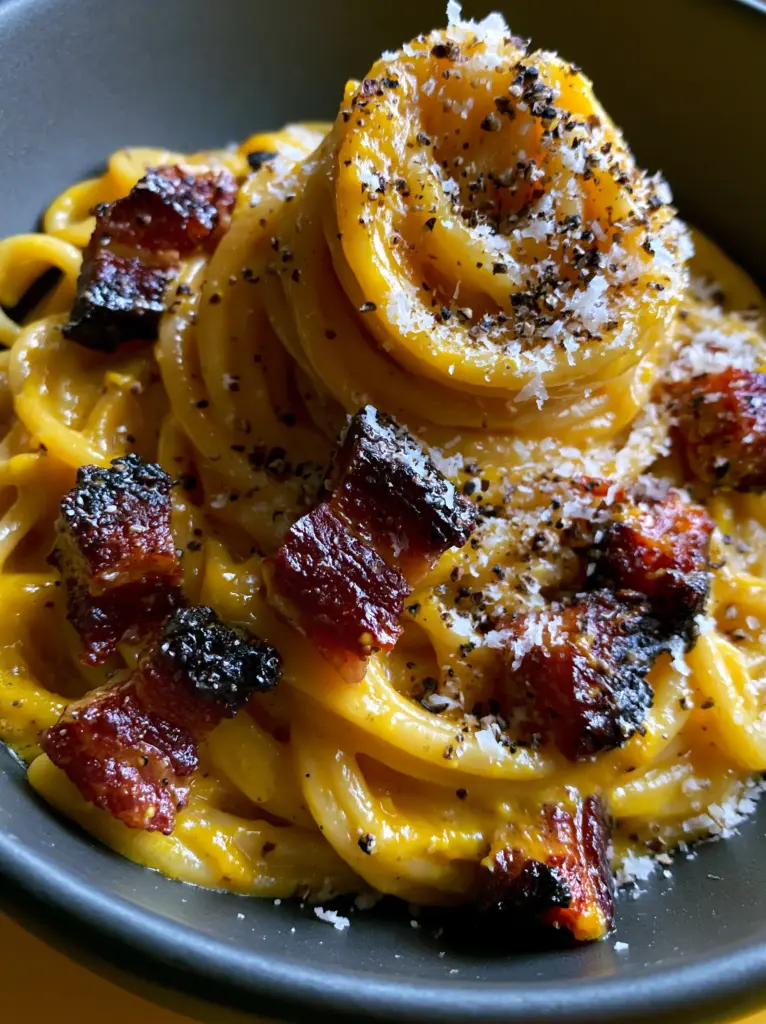
The Methodology: Mastering the Golden Emulsion
1. Rendering the Guanciale to Mahogany Perfection
Slice your guanciale into thick, uniform cubes. Place them in a cold skillet and turn the heat to medium-low.
Listen for the gentle sizzle—this is the sound of the fat rendering out. Cook until the cubes are crispy on the outside and translucent in the center, reaching a deep mahogany hue.
2. The “Pasta Water” Insurance Policy
Bring 4 quarts (3.8L) of water to a boil in your pot. Add a handful of salt, then drop the spaghetti.
Boil the pasta for 2 minutes less than the package directions. It should be very firm, as it will finish cooking in the guanciale fat and residual heat.
3. Creating the Golden Slurry
In a medium mixing bowl, whisk your egg yolks, whole egg, and the majority of your finely grated Pecorino Romano. The mixture should be a thick, pale yellow paste.
Add a generous amount of your coarsely cracked black pepper directly into this paste. This allows the oils to bloom within the fat of the yolks.
4. The Marriage of Strands and Sauce
Using tongs, transfer the spaghetti directly from the water into the skillet with the crispy guanciale. Don’t worry about the water clinging to the noodles; we need it.
Toss the pasta over medium heat for 60 seconds. This allows the spaghetti to absorb the pork fat, ensuring the flavor is built into every coil.
5. The Off-Heat Tempering
This is the most critical step of this Carbonara recipe. Remove the skillet from the heat entirely or transfer everything to a large mixing bowl.
Wait 30 seconds for the temperature to drop slightly. Pour in the egg and cheese mixture while tossing vigorously with tongs. The residual heat will cook the eggs into a glossy, thick cream without curdling.
Expert Tips for Success
- The Water Temper: If the sauce is too thick, add a tablespoon (15ml) of starchy pasta water at a time. The starch acts as a bridge, smoothing out the emulsion.
- The Bowl Prep: Warm your charcoal ceramic bowls in the oven at its lowest setting. Cold bowls will shock the sauce and cause it to lose its gloss.
- The Pepper Crack: Use the bottom of a heavy skillet to crush your peppercorns. This gives you the varied, coarse texture seen in professional food photography.
- Cheese Fineness: Grate your cheese on the smallest hole of your grater. Large shreds won’t melt quickly enough, leading to a lumpy texture.
Creative Pairings and Menu Inspiration
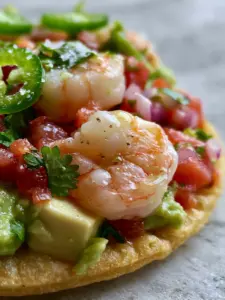
While this dish is a powerhouse on its own, it fits beautifully into a multi-course Italian dinner. You might start with light appetizers like fresh fruit salsas or even pico de gallo for a fusion twist, though traditionalists prefer a simple arugula salad.
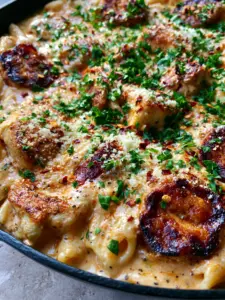
If you’re looking for other pasta inspirations, our seasonal pasta dishes offer lighter, vegetable-forward alternatives. For those who love the creamy texture but want a spicy kick, the creamy cajun pasta is a fantastic next project.
Storage and Reheating Realities
Authentic Carbonara is best enjoyed within minutes of preparation. As the eggs cool, the proteins tighten, and the sauce loses its signature gloss.
If you must store leftovers, keep them in an airtight container for up to 24 hours. To reheat, do not use a microwave. Instead, use a double boiler method with a splash of warm water to gently loosen the sauce without scrambling the eggs.
Frequently Asked Questions
While you can, Pecorino Romano is traditional for its sharp, salty profile. Parmesan is milder and sweeter, which will significantly alter the authentic Roman flavor profile.
No. The Pecorino Romano and guanciale are both very salty. It is better to season the pasta water heavily and let the ingredients provide the salt for the sauce.
The secret is using high-quality pasture-raised eggs (which have darker yolks) and a high ratio of yolks to whole eggs, combined with vigorous tossing to emulsify the fat and water.
Pancetta is the closest substitute as it is also cured pork belly. If neither is available, use thick-cut unsmoked bacon, though it will add a smoky flavor not present in the original dish.
This usually happens when the skillet is too hot. Always remove the pan from the heat source and let it cool for 30 seconds before adding the egg mixture to ensure a silky emulsion.
The Ultimate Roman Carbonara Recipe Card
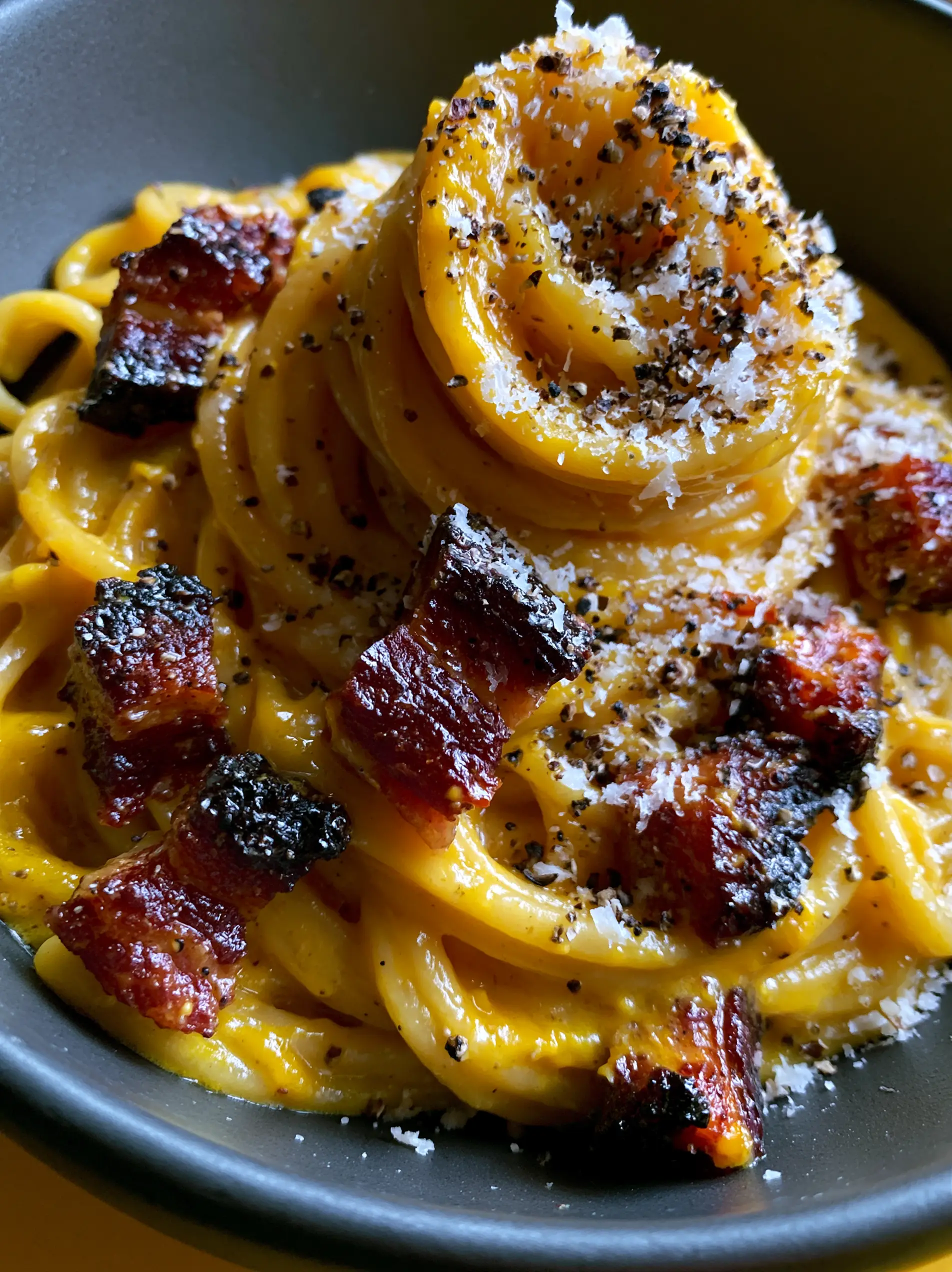
Carbonara Recipe: The Definitive Guide to a Glossy, Roman-Style Masterpiece
Ingredients
Equipment
Method
- Place guanciale in a cold skillet and heat to medium. Sear until the edges are deep mahogany and crispy, and the fat has rendered out.
- Cook spaghetti in salted boiling water until 2 minutes before al dente. Reserve 1 cup (240ml) of pasta water.
- In a separate bowl, whisk yolks, whole egg, and most of the Pecorino into a thick paste with black pepper.
- Toss pasta in the guanciale skillet. Remove from heat. Rapidly stir in the egg mixture, adding reserved water as needed for a glossy sauce.
Notes
Ensure the pan is off the heat before adding eggs to avoid scrambling.
Join the Feast Bloom Community
Mastering the Carbonara recipe is a rite of passage for every home cook. We want to see your glossy, golden coils! Did you manage to achieve that mahogany sear on your guanciale?
Leave a comment below with your results and don’t forget to follow us on Pinterest for more visual recipe inspirations. If you loved this, share it with a friend who appreciates the art of authentic Italian cooking!